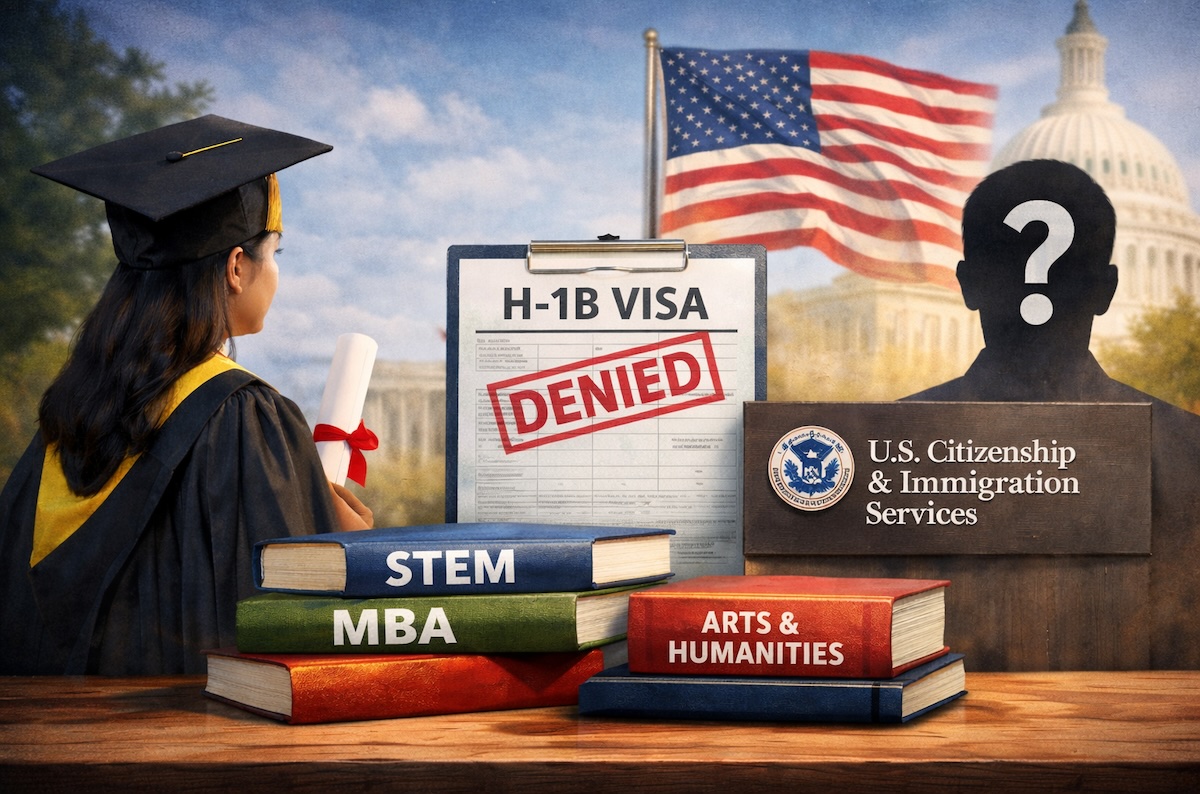
If you earned a U.S. master’s degree and are getting ready for the H‑1B lottery, it’s natural to assume your degree qualifies you for the advanced degree cap. Unfortunately, that’s not always true—and getting it wrong can create real problems later.
Below, we explain how the H‑1B cap works, why some U.S. master’s degrees do not qualify for the advanced degree cap, and how you can confirm whether your school meets the legal requirements before registration.
Understanding the H‑1B Cap
Each year, Congress limits the number of new H‑1B visas. USCIS divides these into two groups:
- Regular Cap (65,000 visas): Open to all H‑1B‑eligible professionals with at least a bachelor’s degree. A portion of these visas is reserved for nationals of Chile and Singapore.
- Advanced Degree Cap (20,000 additional visas): Reserved for individuals who earned a master’s degree or higher from a qualifying U.S. institution. This is commonly called the “master’s cap.”
Why the Master’s Cap Is Important
If your degree qualifies for the advanced degree cap, you effectively get two chances in the H‑1B lottery. USCIS first runs the lottery for the regular cap. If you are not selected there, USCIS then conducts a second lottery limited to advanced‑degree‑eligible candidates.
This double opportunity significantly improves selection odds. Under the FY 2027 weighted lottery system (registration opens March 4, 2026), higher‑wage positions receive additional weighting, making master’s cap eligibility even more valuable.
__________________________________________________________________________________________________________
Key takeaway: The master’s cap can be a major advantage—but only if your degree truly qualifies.
__________________________________________________________________________________________________________
Why Some Master’s Degrees Don’t Qualify
U.S. immigration law does not recognize every U.S. master’s degree for advanced‑degree cap purposes. To qualify, the degree must be issued by a “United States institution of higher education” as defined by federal law. That definition has five specific requirements, and all of them must be met.
1. The School Must Be Public or Nonprofit
This is the most common issue. Degrees from for‑profit institutions do not qualify for the master’s cap, even if the school is accredited and well known.
For example, an MBA from a private nonprofit university qualifies, while an MBA from a for‑profit school such as DeVry/Keller or University of Phoenix does not. Graduates of for‑profit schools can still be entered under the regular cap, but they do not receive the master’s cap advantage.
2. The School Must Be Accredited
The institution must be accredited by a nationally recognized accrediting agency. While pre‑accreditation may exist in limited circumstances, relying on it is risky for H‑1B purposes.
3. The School Must Admit High School Graduates
The institution must admit only students who have a high school diploma or its equivalent.
4. The School Must Be State‑Authorized
The school must be legally authorized by its state to provide post‑secondary education.
5. The School Must Offer Bachelor’s‑Level Programs
The institution must award bachelor’s degrees or offer qualifying programs that lead to or support graduate‑level study.
Timing Matters More Than You Think
USCIS applies a strict timing rule based on a binding agency decision: the school must meet all of the legal requirements at the time your degree was awarded, not when the H‑1B petition is filed.
What this means in practice:
- If your school was for‑profit or unaccredited when you graduated, your degree does not qualify—even if the school later became nonprofit or accredited.
- If your school was qualifying when you graduated, your degree can still qualify even if the school later lost accreditation or closed.
This timing issue has led to denied petitions, even when employers believed they were filing correctly.
Does the Degree Itself Qualify as a “Master’s”?
USCIS also looks at the nature of the degree itself, not just the school:
- J.D. and M.D. degrees generally qualify because they require prior undergraduate education.
- Doctor of Chiropractic degrees typically do not qualify because they are considered entry‑level degrees.
- Standard M.A., M.S., MBA, M.Eng., and similar graduate degrees from qualifying institutions usually meet the requirement.
How to Check Your School Before Registration
Before registering for the H‑1B lottery, take these steps:
- Use the NCES College Navigator to confirm that the school is public or nonprofit and accredited.
- Verify accreditation with the U.S. Department of Education, paying close attention to accreditation dates.
- Confirm the school’s status at the time of graduation if the institution has changed ownership or accreditation status.
Final Thoughts
Do not assume that a U.S. master’s degree automatically qualifies for the H‑1B advanced degree cap. Verifying eligibility early can prevent delays, RFEs, or denials—and can protect future extensions or transfers.
If you have questions about whether your master’s degree qualifies for the H-1B advanced degree cap, or if you need help with your H-1B petition strategy, contact us for a consultation. We help employers and employees navigate the complexities of the H-1B process every day.
Disclaimer: This blog post is for informational purposes only and does not constitute legal advice. Immigration law is complex and fact-specific. Please consult a qualified immigration attorney for guidance on your individual situation.